The global South as an ontological position?


This semester, I have been running a PhD course titled Urbanism: Perspectives from the global South, where we seek to reflect on where and how we should come to understand the urban condition through a “southern urban critique” lens – this, without forgetting the fundamental question: “What is the urban?” Earlier this month, we had the great pleasure of welcoming Tariq Jazeel (University College London), who led an engaging seminar and delivered a thought-provoking public lecture. For the seminar, I asked Tariq to reflect on the idea of the global South as an ontological position and connect it to discussions about the tensions between the particular and the universal. During his intervention, Tariq shared he was uneasy with the idea of a single ontological position, since there are many global Souths. He then proceeded to encourage us to reflect on the strategic value of the concept “global South.” What is it exactly, and what does it help us do?

Most of the people around the seminar table had a connection to the global South (understood broadly as a geographical location), but we could not agree on an answer. One person reflected on how the global South was a feeling – something that resonates inside of you. Somebody else said it was a political call for justice. I added it was an act of positionality, a marker to highlight a relation of unequal power. The discussion continued. Perhaps we used “the global South” for lack of a better word? Something instead of the “non-West,” or to describe that that is beyond the EuroAmerican heartland? Tariq agreed the global South served a purpose of strategic essentialism but warned us of the burden of representation.

A week after the seminar with Tariq, I was invited to be an opponent for the final presentations of the actions plans developed by the participants of Danida’s “Sustainable and Inclusive Urban Development” – convened by, among others, the incredible Jacob Rasmussen (Roskilde University). Listening to brilliant presentations that dealt with urban challenges in Nairobi, Casablanca, Medellín and São Paulo, I remembered Tariq’s question and could finally articulate an answer. Following the work of Comaroff and Comaroff (2012), the global South is, of course, not a geographical location but a relation. However, as hinted by my colleagues, the global South is also embodied knowledge. It is an understanding of an everyday life that heavily relies on informal practices and social infrastructures. It is a shared burden, a sense of lack (e.g. basic infrastructure, waste management services), and a heightened risk of death (e.g. the impacts of climate change). This is not to fall into the trap of exoticizing the global South as the Other, the “heart of darkness” (Roy 2009), but to highlight that the global South shares a “colonial wound,” as brilliantly argued by Sultana (2022). So yes, the global South is an ontological position from which new forms of knowledge can be created – “theory is in the flesh,” to borrow the words of Sultana (2022), in the “fleshiness of our bodies, minds, soils, kin.”

However, Tariq was right to point the dangers of the “burden of representation,” remind us that there are many global Souths, and to hint at the limitations of thinking about the global South as a geographical location. Homogenizing the global South ignores historical differences and blinds us to the islands of wealth that exist within it. We cannot forget about the elites that live in the “postcolony” (Mbembe in Melgaço and Xavier Pinto Coelho 2022), who likely experience the “colonial wound” differently. A second important point that Tariq raised was to remind us that there are “singularities” in the periphery/global South that resist being known in the epistemic domains of Western modernity (Jazeel 2019). Concepts such as “world,” “global,” “theory,” and “the city” have roots in European modernity and might keep us in an intellectual prison. Some concepts are so loaded with the legacy of Western modernity that we might need to replace them with another “language” – one that must be learned through a process of translation (Jazeel 2019; also see Roy 2011). Otherwise, echoing Lorde (1983), we might be trying to explain the realities of the global South with the master’s tools.

So let us think about the global South as an ontological position – but with care, attentive to historical difference, so that our move does not end up being an act that homogenizes, ignores, and erases the differences across the global Souths.

References

  • Comaroff J and Comaroff JL (2012) Theory from the South: Or, how Euro-America is Evolving Toward Africa. Anthropological Forum 22(2): 113–131.
  • Jazeel T (2019) Singularity. A manifesto for incomparable geographies. Singapore Journal of Tropical Geography 40(1): 5–21
  • Melgaço L and Xavier Pinto Coelho L (2022) Race and Space in the Postcolony: A Relational Study on Urban Planning Under Racial Capitalism in Brazil and South Africa. City and Community 21(3): 214–237
  • Lorde A (1983) The Master’s Tools Will Never Dismantle the Master’s House. In Lorde A Sister Outsider: essays and speeches. Crossing Press: Berkeley.
  • Roy A (2011) Slumdog Cities: Rethinking Subaltern Urbanism. International Journal of Urban and Regional Research 35(2): 223–238.
  • Sultana F (2022) The unbearable heaviness of climate coloniality. Political Geography (99):102638

Featured image: Image created using DALL-E by OpenAI.
What “extractivism” are we talking about?


In a previous piece, I discussed two thought-provoking interventions from the 12th Conference of the Nordic Latin American Research Network (NOLAN) that took place last May. Another highlight of this conference was attending a workshop on extractivism led by Eduardo Gudynas, a prominent expert in the field.

Gudynas was engaging and intellectually stimulating, forcing us to rethink what we thought we knew about extractivism. He began by reminding us that, in a context where the literature on extractivism and different varieties of extractivism has grown so much in the last years, it is important to stop and ask: how do we actually define extractivism? Are all commodifying practices considered extractivism? Moreover, what is the difference between extractivism and capitalism, and what can it reveal about capitalist practices? Gudynas urged us to think about the importance of definitions, arguing that we cannot begin to think about alternatives if we are not even sure ourselves what it is exactly that we are analyzing. A conceptual definition, in his view, needs to embed an understanding of history and be grounded in empirical findings. Furthermore, a rigorous definition needs to be precise, stable, and understandable.

Given that the scholarship on extractivism has expanded from its origins in Latin American colonial history and its focus on natural resource extraction (Chagnon et al., 2022; Veltmeyer, 2022), I think that Gudynas’ emphasis on the importance of conceptual precision is timely. There are currently multiple varieties of extractivism including: aeolian extractivism (Howe & Boyer, 2016), racial extractivism (Preston, 2017), hydroelectric extractivism (Post, 2022), urban extractivism (Streule, 2023), and green extractivism (Tornel, 2023). The work of Chagnon et al. (2022) suggests global extractivism and further reports the existence of four more iterations: total extractivism, agro-extractivism, and epistemic extractivism. The point raised by Gudynas urge us to reflect on the limitations of operationalizing extractivism in contexts outside of Latin America and question what is it that we gain theoretically by adding a prefix. My agreement with Gudynas is not to deny the usefulness of combining concepts. Extractivism, after all, has undergone various phases in its interaction with different modalities of capital accumulation (Farthing & Fabricant, 2018; Svampa, 2019). Current scholarship, for example, highlights there might be entanglements between extractivism and infrastructure (cf. Merino, 2024; Streule, 2023). Theoretical conversations also seem to be needed to understand the practices of disposability enabled by extractivism in relationship to racialized labor subjects. However, as argued by Gudynas, a definition that is too broad or not stable enough loses meaning.

Gudynas presented his definition of extractivism, clarifying it entails practices of appropriation of natural resources in high volumes where more than 50% of the extracted resource is exported. Here is where I become wary of Gudynas’ definition. The work of Kröger et al. (2021) define extractivism as a practice of “overexploitation and appropriation of natural resources.” Under extractivism, nature that is considered expendable is commodified in a context of depletion or even ecocide. Thinking with Kröger, from an ecological perspective, I would think that it does not matter if an extracted resource in high volumes stays in the country of origin or is exported. The environmental damage done is the same, regardless of destination. I raised this question during the workshop and Gudynas responded that, while it was true the damage was the same, it was important to highlight processes of unequal global North-South relations. The global South, in general, provides the natural resources that are used in the global North. While I agree we should not overlook unequal geopolitical relations and ignore extractivism’s origins in the European plunder of the Americas, I was left wondering if an understanding of the global North as the consumer/manufacturer while the global South is the raw material provider falls short and seems to reflect processes more prevalent in the 20th century. Thinking about the economic power of emerging economies, this perspective seems to ignore consumer practices, export-oriented manufacturing processes, and the power of the elites within the global South. It also implies that high-volume practices of appropriation of natural resources are ok as long as the resources are used by national governments (reminding us of “progressive” extractivism). This, in turn, influences debates of what sustainability might look like in contexts of poverty eradication programs. Regardless of the debate, I can see how Gudynas raises a vital point: if we are to imagine alternative futures to extractivism, our theoretical points of departure and scope need to be better clarified. In other words, we need to explain, what “extractivism” are we talking about?

References
  • Chagnon, C. W., Durante, F., Gills, B. K., Hagolani-Albov, S. E., Hokkanen, S., Kangasluoma, S. M. J., Konttinen, H., Kröger, M., LaFleur, W., Ollinaho, O., & Vuola, M. P. S. (2022). From extractivism to global extractivism: the evolution of an organizing concept. Journal of Peasant Studies, 49(4), 760–792. https://doi.org/10.1080/03066150.2022.2069015
  • Farthing, L., & Fabricant, N. (2018). Open Veins Revisited: Charting the Social, Economic, and Political Contours of the New Extractivism in Latin America. Latin American Perspectives, 45(5), 4–17. https://doi.org/10.1177/0094582X18785882
  • Howe, C., & Boyer, D. (2016). Aeolian extractivism and community wind in southern Mexico. Public Culture, 28(2), 215–235. https://doi.org/10.1215/08992363-3427427
  • Kröger, M., Hagolani-Albov, S. E., & Gills, B. K. (2021). Extractivisms. In C. P. Krieg & R. Toivanen (Eds.), Situating Sustainability: A Handbook of Contexts and Concepts (pp. 239–252). Helsinki University Press.
  • Merino, R. (2024). The open veins of the Amazon: rethinking extractivism and infrastructure in extractive frontiers. Journal of Peasant Studies. https://doi.org/10.1080/03066150.2024.2318466
  • Post, E. (2022). Hydroelectric Extractivism: Infrastructural Violence and Coloniality in the Sierra Norte de Puebla, Mexico. Journal of Latin American Geography, 21(3), 49–95. https://doi.org/10.1353/lag.2022.0039
  • Preston, J. (2017). Racial extractivism and white settler colonialism: An examination of the Canadian Tar Sands mega-projects. Cultural Studies, 31(2–3), 353–375. https://doi.org/10.1080/09502386.2017.1303432
  • Streule, M. (2023). Urban extractivism. Contesting megaprojects in Mexico City, rethinking urban values. Urban Geography, 44(1), 262–271. https://doi.org/10.1080/02723638.2022.2146931
  • Svampa, M. (2019). Neo-extractivism in Latin America. In Neo-extractivism in Latin America. Cambridge University Press. https://doi.org/10.1017/9781108752589
  • Tornel, C. (2023). Energy justice in the context of green extractivism: Perpetuating ontological and epistemological violence in the Yucatan Peninsula. Journal of Political Ecology, 30(1). https://doi.org/https://doi.org/10.2458/jpe.5485
  • Veltmeyer, H. (2022). Extractivism and beyond: Latin America debates. Extractive Industries and Society, 11(September), 101132. https://doi.org/10.1016/j.exis.2022.101132

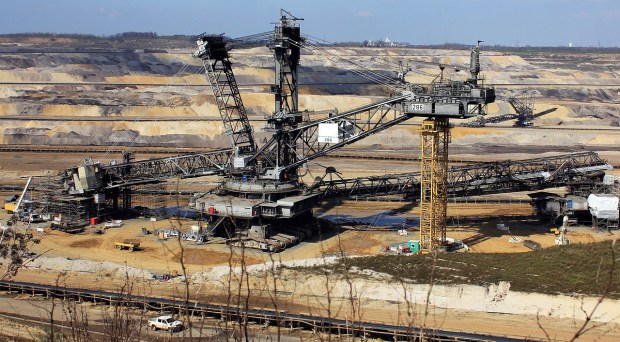
Featured image: Image by NoName_13 from Pixabay.

How do we take postcolonial critique seriously from a location in the global North?


This blog has been dormant for some time. Happy to be back after a long period of parental leave, fieldwork, and a wonderful experience as a Visiting Scholar at the Urban Institute, University of Sheffield.


Last week I attended a meeting of Urban Agency III: Towards a Sustainable Integration of Disciplines in Urban Studies, a scientific research network that I am part of (alongside Guy Baeten, Carina Listerborn, Defne Kadioglu, Lorena Melgaço and Chiara Valli) through the Institute for Urban Research, IUR, at Malmö University. Urban Agency III seeks to investigate the “institutional embedding” of the discipline of urban studies across institutes in Europe and North America. The meeting was filled with interesting sessions discussing issues from “the interface between city and academia” to “collaboration and co-creation in the city.” One of the most stimulating interventions, in my view, was a presentation by two scholars who talked about how scientific networks can engage with postcolonial and comparative urbanism critiques. Two interesting questions posed to the audience were: How do scholars based in European institutes humbly try to take the postcolonial turn in urban studies seriously? Does doing urban research on European cities make you Eurocentric?

These thought-provoking questions reminded me of a workshop we had back in October at the IUR, Interrogating the South, led by the brilliant Kavita Ramakrishnan, Associate Professor in Geography and Global Development, University of East Anglia (who at that point was a Visiting Researcher at the IUR). For me, it is obvious that doing urban studies “on” European cities does not make you automatically Eurocentric since the project of postcolonizing (or provincializing) does not entail a geographical location, but a method. Drawing on Ananya Roy’s (2009) classic piece New geographies of theory, there are two contributions that have summarized this point brilliantly. The first one is by Nancy Odendaal (2021) who argues:

“Provincialising is not about rejecting Western/Northern debates, or only embracing Global South/Eastern experiences. It opens up analysis to how a phenomenon is tied to and generated by place, with a broader range of urban experiences.”

The second intervention is carried out by Lawhon et al., (2014) who state:

“… the South is not homogenous; different intellectual traditions exist throughout the global South and these can and should contribute to the development of theory from the South in different ways. This frames the “global South” as an epistemological location—rather than a geographical container—through which a provincialization of dominating theory can be crafted.”

It is necessary to stay away from the idea that the global South presumes a fixed geography—a precise location where one goes to carry out postcolonial approaches, for example. Instead, it is important to remember the “relational and on-going construction of North-South divides” that includes Imperial Souths, poor Norths, and bodies that carry the global South with them (Fonseca Alfaro, 2023). As one of the attendants argued, one can also find the postcolonial within Europe and explore the colonial remains that exist in contemporary cities.

As the discussion during the meeting moved to concrete actions, two suggestions emerged. One proposal suggested using pragmatism to respond as situations arose while a second opinion raised the issue that there is a need to create institutional space for postcoloniality. While both suggestions have their merits, I side with the second option. In my view, concrete actions that urban studies institutes based in Europe and North America could make to take postcolonial critique seriously include:

  • Ensuring curricula includes a variety of authors that describe urban experiences and processes from across the world (and not just the EuroAmerican heartland).
  • Making space for minorities in institutional spaces and teaching.
  • Enabling the interaction with institutes in the global South with, for example, Visiting Researcher schemes.
  • Acknowledging their “locus of enunciation” (i.e., location from where one speaks and produces knowledge. This includes a reflection of limitations in terms of generalizability and universalizing claims)
References

Fonseca Alfaro C (2023) Producing Mayaland: Colonial Legacies, Urbanization, and the Unfolding of Global Capitalism. Chichester: Wiley.

Lawhon M, Ernstson H and Silver J (2014) Provincializing urban political ecology: Towards a situated UPE through African urbanism. Antipode 46(2). Blackwell Publishing Inc.: 497–516.

Odendaal N (2021) Everyday urbanisms and the importance of place: Exploring the elements of the emancipatory smart city. Urban Studies 58(3): 639–654.

Roy A (2009) The 21st-Century Metropolis: New Geographies of Theory. Regional Studies 43(6): 819–830.


Featured image: Photo by USGS on Unsplash.