In a previous piece, I discussed two thought-provoking interventions from the 12th Conference of the Nordic Latin American Research Network (NOLAN) that took place last May. Another highlight of this conference was attending a workshop on extractivism led by Eduardo Gudynas, a prominent expert in the field.
Gudynas was engaging and intellectually stimulating, forcing us to rethink what we thought we knew about extractivism. He began by reminding us that, in a context where the literature on extractivism and different varieties of extractivism has grown so much in the last years, it is important to stop and ask: how do we actually define extractivism? Are all commodifying practices considered extractivism? Moreover, what is the difference between extractivism and capitalism, and what can it reveal about capitalist practices? Gudynas urged us to think about the importance of definitions, arguing that we cannot begin to think about alternatives if we are not even sure ourselves what it is exactly that we are analyzing. A conceptual definition, in his view, needs to embed an understanding of history and be grounded in empirical findings. Furthermore, a rigorous definition needs to be precise, stable, and understandable.
Given that the scholarship on extractivism has expanded from its origins in Latin American colonial history and its focus on natural resource extraction (Chagnon et al., 2022; Veltmeyer, 2022), I think that Gudynas’ emphasis on the importance of conceptual precision is timely. There are currently multiple varieties of extractivism including: aeolian extractivism (Howe & Boyer, 2016), racial extractivism (Preston, 2017), hydroelectric extractivism (Post, 2022), urban extractivism (Streule, 2023), and green extractivism (Tornel, 2023). The work of Chagnon et al. (2022) suggests global extractivism and further reports the existence of four more iterations: total extractivism, agro-extractivism, and epistemic extractivism. The point raised by Gudynas urge us to reflect on the limitations of operationalizing extractivism in contexts outside of Latin America and question what is it that we gain theoretically by adding a prefix. My agreement with Gudynas is not to deny the usefulness of combining concepts. Extractivism, after all, has undergone various phases in its interaction with different modalities of capital accumulation (Farthing & Fabricant, 2018; Svampa, 2019). Current scholarship, for example, highlights there might be entanglements between extractivism and infrastructure (cf. Merino, 2024; Streule, 2023). Theoretical conversations also seem to be needed to understand the practices of disposability enabled by extractivism in relationship to racialized labor subjects. However, as argued by Gudynas, a definition that is too broad or not stable enough loses meaning.
Gudynas presented his definition of extractivism, clarifying it entails practices of appropriation of natural resources in high volumes where more than 50% of the extracted resource is exported. Here is where I become wary of Gudynas’ definition. The work of Kröger et al. (2021) define extractivism as a practice of “overexploitation and appropriation of natural resources.” Under extractivism, nature that is considered expendable is commodified in a context of depletion or even ecocide. Thinking with Kröger, from an ecological perspective, I would think that it does not matter if an extracted resource in high volumes stays in the country of origin or is exported. The environmental damage done is the same, regardless of destination. I raised this question during the workshop and Gudynas responded that, while it was true the damage was the same, it was important to highlight processes of unequal global North-South relations. The global South, in general, provides the natural resources that are used in the global North. While I agree we should not overlook unequal geopolitical relations and ignore extractivism’s origins in the European plunder of the Americas, I was left wondering if an understanding of the global North as the consumer/manufacturer while the global South is the raw material provider falls short and seems to reflect processes more prevalent in the 20th century. Thinking about the economic power of emerging economies, this perspective seems to ignore consumer practices, export-oriented manufacturing processes, and the power of the elites within the global South. It also implies that high-volume practices of appropriation of natural resources are ok as long as the resources are used by national governments (reminding us of “progressive” extractivism). This, in turn, influences debates of what sustainability might look like in contexts of poverty eradication programs. Regardless of the debate, I can see how Gudynas raises a vital point: if we are to imagine alternative futures to extractivism, our theoretical points of departure and scope need to be better clarified. In other words, we need to explain, what “extractivism” are we talking about?
References
- Chagnon, C. W., Durante, F., Gills, B. K., Hagolani-Albov, S. E., Hokkanen, S., Kangasluoma, S. M. J., Konttinen, H., Kröger, M., LaFleur, W., Ollinaho, O., & Vuola, M. P. S. (2022). From extractivism to global extractivism: the evolution of an organizing concept. Journal of Peasant Studies, 49(4), 760–792. https://doi.org/10.1080/03066150.2022.2069015
- Farthing, L., & Fabricant, N. (2018). Open Veins Revisited: Charting the Social, Economic, and Political Contours of the New Extractivism in Latin America. Latin American Perspectives, 45(5), 4–17. https://doi.org/10.1177/0094582X18785882
- Howe, C., & Boyer, D. (2016). Aeolian extractivism and community wind in southern Mexico. Public Culture, 28(2), 215–235. https://doi.org/10.1215/08992363-3427427
- Kröger, M., Hagolani-Albov, S. E., & Gills, B. K. (2021). Extractivisms. In C. P. Krieg & R. Toivanen (Eds.), Situating Sustainability: A Handbook of Contexts and Concepts (pp. 239–252). Helsinki University Press.
- Merino, R. (2024). The open veins of the Amazon: rethinking extractivism and infrastructure in extractive frontiers. Journal of Peasant Studies. https://doi.org/10.1080/03066150.2024.2318466
- Post, E. (2022). Hydroelectric Extractivism: Infrastructural Violence and Coloniality in the Sierra Norte de Puebla, Mexico. Journal of Latin American Geography, 21(3), 49–95. https://doi.org/10.1353/lag.2022.0039
- Preston, J. (2017). Racial extractivism and white settler colonialism: An examination of the Canadian Tar Sands mega-projects. Cultural Studies, 31(2–3), 353–375. https://doi.org/10.1080/09502386.2017.1303432
- Streule, M. (2023). Urban extractivism. Contesting megaprojects in Mexico City, rethinking urban values. Urban Geography, 44(1), 262–271. https://doi.org/10.1080/02723638.2022.2146931
- Svampa, M. (2019). Neo-extractivism in Latin America. In Neo-extractivism in Latin America. Cambridge University Press. https://doi.org/10.1017/9781108752589
- Tornel, C. (2023). Energy justice in the context of green extractivism: Perpetuating ontological and epistemological violence in the Yucatan Peninsula. Journal of Political Ecology, 30(1). https://doi.org/https://doi.org/10.2458/jpe.5485
- Veltmeyer, H. (2022). Extractivism and beyond: Latin America debates. Extractive Industries and Society, 11(September), 101132. https://doi.org/10.1016/j.exis.2022.101132
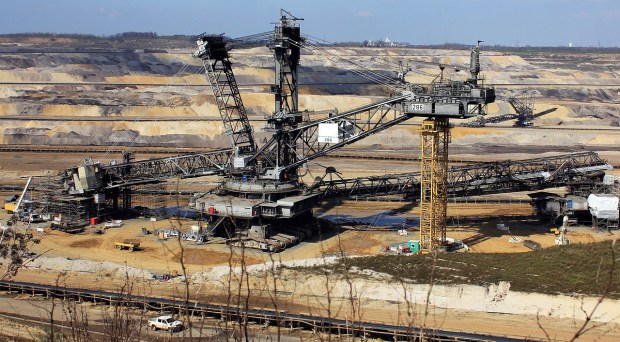
Featured image: Image by NoName_13 from Pixabay.

 Claudia Fonseca Alfaro